Tilt and turn windows.
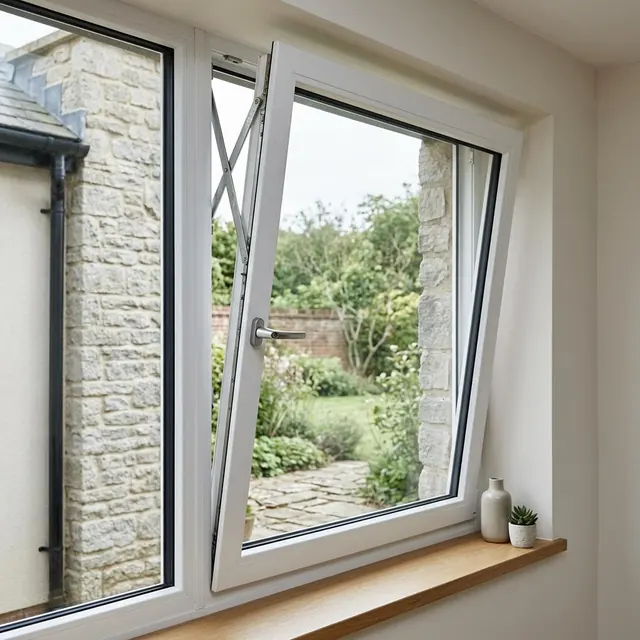
One sash, two opening positions: tilt inward at the top or turn inward from the side.
What are Tilt & Turn windows?
Tilt-and-turn windows offer two ways to open the same sash. A top tilt can provide controlled ventilation, while the side-hinged inward turn allows wider access to the opening. Because the sash opens into the room, interior clearance is an important part of choosing this style.
Worth thinking about.
Check the space inside the room, including blinds and furniture, and ask how the handle positions work before committing to the layout.
Practical details.
Maintenance
Clean the frame with mild soapy water and a soft cloth. Keep drainage openings clear and follow the system maker's instructions for hinges, locking points and seals. Avoid forcing the handle if the sash is not correctly positioned.
Finishes & colour
Finish options depend on the frame system and may include different colours or wood-effect looks. Check samples and confirm the inside and outside finish before ordering.
Room & opening
The sash opens inward in both modes, so allow for its swing and check nearby furniture, curtains and blinds. Also consider safe reach, ventilation and access to clean the outside glass from indoors.
Frequently asked questions.
How does a tilt-and-turn window work?
The handle selects between a top-tilt position for a limited opening and an inward side-turn position for wider access. Operation varies by hardware, so follow the maker's instructions.
Does a tilt-and-turn window open into the room?
Yes. Both the tilt and turn positions open inward, so check that furniture, curtains and blinds will not obstruct the sash.
Can I clean the outside from indoors?
The inward-turn position can provide access to the outer glass, but safe use depends on the window, its location and the manufacturer's instructions. Do not lean out of an open window.